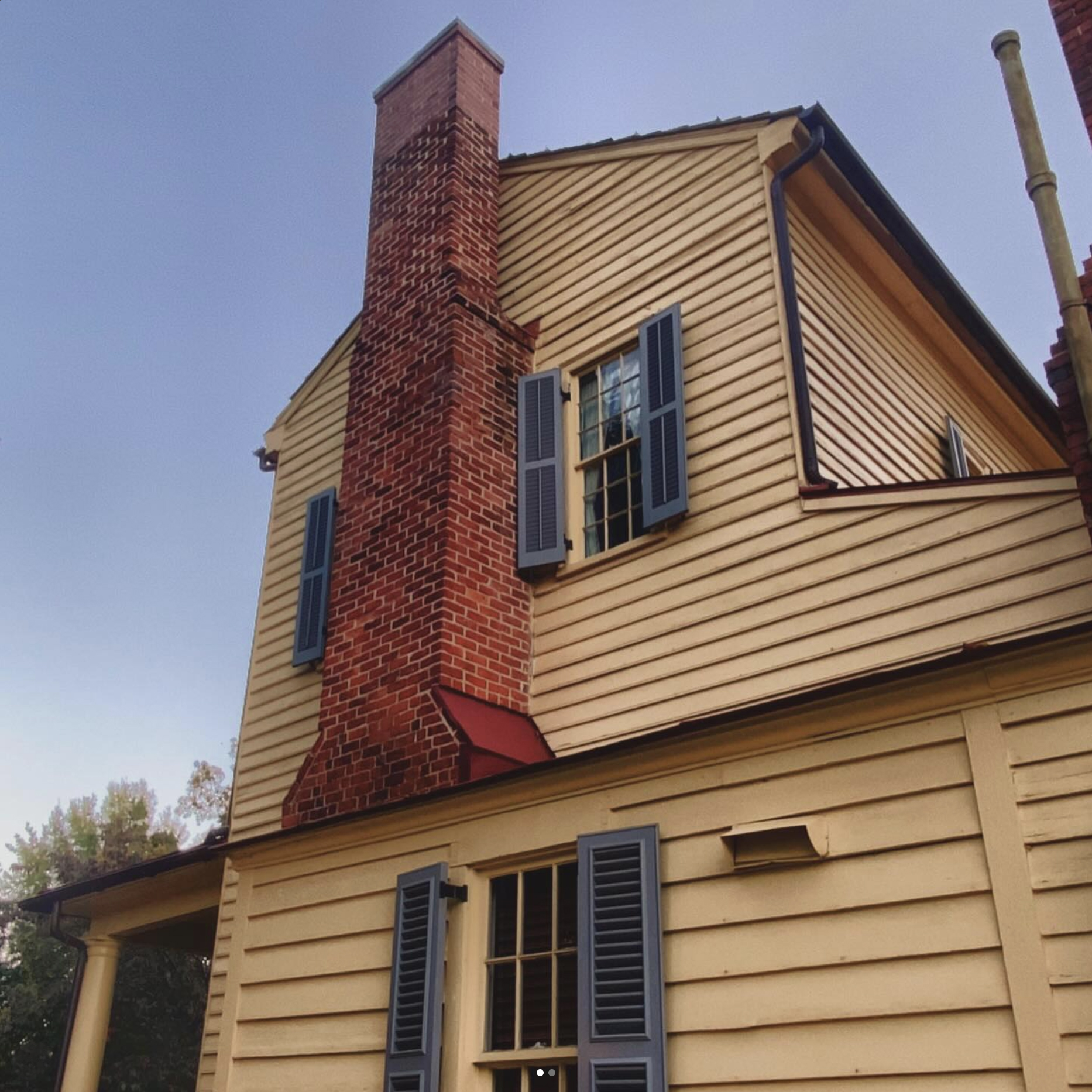
Historic home — preservation capture
 Back
Heritage · Photography
Ongoing

Butternut Heritage

An American heritage project
Subject
Historic Places
Published
@ohgollybritta
Featured
Compass Magazine
Medium
Documentary photography
Subjects
Historic architecture
Scope
Homes, landmarks, landscapes
Home
Instagram & press

America is the greatest experiment.
That doesn't mean we don't have a past.

A generation has been told, in a hundred quiet ways, that this country is too new to have heritage worth keeping. That real history lives somewhere else — in castles, in capitals, in countries with longer timelines. That an experiment is a blank page, and a blank page is a thing to be filled rather than a thing with depth underneath.

But the experiment didn't begin on empty ground. It was built on top of lives already being lived, houses already being raised, churches already holding communities together on Sunday mornings. A farmhouse that sheltered a Revolutionary soldier was a farmhouse before the Revolution. A meetinghouse that stood through a civil war stood before it, too. The experiment gave us a framework. The land — and the people who were already on it, building on it, burying their dead in it — gave us a past.

That past hasn't disappeared. It has been made quieter. Through neglect. Through demolition on tired Tuesdays. Through a cultural habit of measuring ourselves against Europe's ruins and deciding we don't have any. We do. They're standing by the side of every back road in this country. They just haven't been looked at in a long time.

"The experiment didn't begin on empty ground."
Why It Matters
A people without a visible past is easier to unmoor. When younger generations inherit the idea that America has no heritage worth honoring, they lose more than buildings — they lose the sense that their own roots carry weight. The correction doesn't require an argument. It requires showing the evidence, close up and in detail, and trusting people to see what's there.
The Work
Butternut Heritage photographs the places most people drive past: farmhouses, outbuildings, small churches, weathered Main Street storefronts, and the land they sit on. Not the marquee sites with plaques and foundations behind them. The ordinary places, because the ordinariness is the point. Proof the record is still here — one porch, one chimney, one town at a time.

A name made from
what the land gave.

When Confederate supply lines broke and the dye ran out, soldiers boiled walnut hulls to color their uniforms a warm, durable brown. The men who wore them became known as the Butternuts. The name stuck because it was honest — a color made from a tree that grew where they stood, worn by people who made do with what the land gave them.

The same word lived on American houses in the same era — butternut was a common historic paint color, pigmented from the same hulls, used on the same clapboard homes this project documents. It is a small, specific, regional word. It names a color, a tree, a generation of soldiers, and a whole quiet way of building from what is already there.

That is also the thesis of this work: the materials, the skills, the stories, and the structures are already here. They always were. The project only asks that we look at them again.

The Color
A warm walnut brown, hand-ground from hulls harvested off trees native to the Mid-Atlantic, Appalachian, and Upland South regions — the same regions where most of this project's subjects still stand.
The Idea
Heritage made from place, not imported from somewhere else. Built from what was available. Carried forward by the people who lived here. Still visible to anyone willing to slow down and see it.

The whole building —
and the story around it.

Every site gets the same treatment: the grand view and the small one. Buildings don't exist in isolation, and neither do their records. The goal is a visual archive complete enough that someone who never stood in the same room can understand what was there, where it sat, and what made it matter — a quiet argument, made in photographs, that the American past is detailed, specific, and still visible if you know where to look.

🏛
Exteriors & Facades
Elevations from every side in consistent light. The record a future restoration would actually use: rooflines, fenestration, trim profiles, material transitions.
🪟
Interior Rooms
Original millwork, mantels, flooring, plaster, and hardware — photographed where access allows. The things replacements can't recreate because no one remembers them.
🔍
Architectural Details
Close work on brackets, muntins, masonry joints, decorative iron, makers' marks. The details that date a building and identify its maker when written records are missing.
🌾
Landscape & Context
Approach roads, outbuildings, fencelines, treelines, and the working landscape a building belongs to. A house out of its setting is half a record.
⚠️
Threatened Sites
Properties facing demolition, neglect, or major alteration get documented on a priority basis — sometimes the only existing photographic record is the one made before the work starts.
🪖
Living History
Reenactments, craftspeople, and heritage events in situ — the people keeping the buildings warm. A historic place used is a historic place more likely to survive.
🌳
Genealogy Sites
Cemeteries, ancestral homes, and documented family landmarks. Photographed as record rather than ornament, and tagged with the research that connects them to the people buried there.
Before & After
Where the same site is revisited across years, the change gets recorded. Some projects are a before-photo nobody knew they'd need until the after-photo was already inevitable.
📂
Public Archive
Captions include what's known, what's uncertain, and where to find the rest. The goal isn't a moody photo feed — it's a record a future researcher can actually work with.

Research first,
shutter second.

Every capture starts with a name, an owner, a date, a story. The photographs are better when the research is better — you frame a porch differently when you know a treaty was signed on it, document a kitchen differently when you know three generations of the same family cooked in it.

Access is handled through property owners, local historical societies, heritage organizations, and chapter networks. Nothing goes up without permission, and sensitive locations — active archaeology, family cemeteries, private interiors — stay off the public grid unless the stewards specifically want them shared.

Research — deed records, oral histories, chapter archives, and genealogical context established before the shoot
Access — coordinated with property owners, historical societies, and heritage organizations; no trespass
Capture — consistent elevations, natural light where possible, detail passes on original material and maker's marks
Caption — site name, location, documented history, and citations where applicable
Publish — shared on Instagram as @ohgollybritta, submitted to heritage publications, and archived for chapter use

On Instagram.
In Compass Magazine.

The working archive lives on Instagram, updated as sites are visited and documented. Selected work has been featured in Compass Magazine and published through heritage organization chapter materials.

Come take a closer look.

The working archive lives here. Historic homes, forgotten landmarks, threatened sites, and the living history happening in and around them — updated as locations are documented. Research captions included.